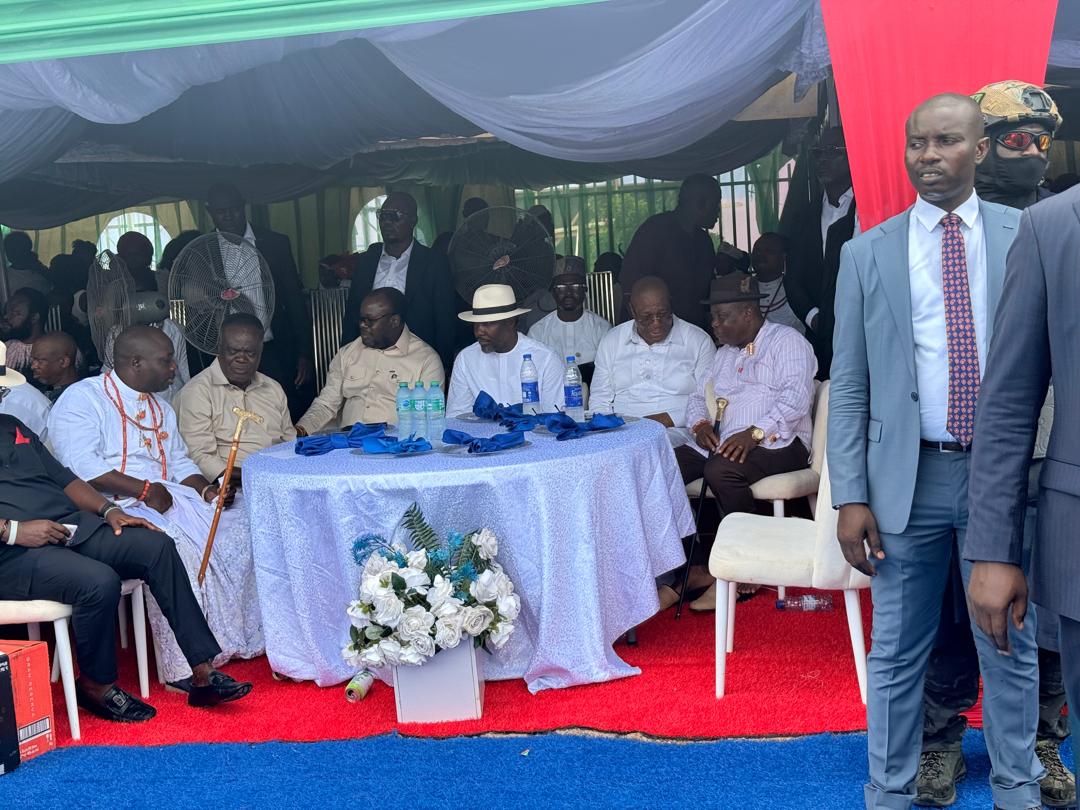








The joint committees on Petroleum Resources of the National Assembly of Nigeria have dismissed three petitions challenging the pipeline surveillance contract, while passing a vote of confidence on Tantita Security Services Nigeria Limited, security agencies, and the Nigerian National Petroleum Company Limited for improving oil production and safeguarding critical infrastructure.
The resolution followed a motion moved by Chairman of the House Committee on Petroleum Resources (Midstream), Hon. Prince Henry Okojie, during a one-day parliamentary roundtable on pipeline security and efforts to curb crude oil theft.
The National Assembly on Wednesday overwhelmingly endorsed Tantita, describing the firm as a “critical national asset” for its role in tackling crude oil theft and pipeline vandalism.
Over 300 senators and members of the House of Representatives reportedly passed a unanimous vote of confidence, rejecting calls to decentralise or split the surveillance contract.
At the joint committee hearing, lawmakers dismissed petitions against the company, citing lack of evidence. Chairman of the House Committee on Petroleum Resources (Downstream), Hon. Ikenga Imo Ugochinyere, stated that “there is no credible evidence to sustain any of the allegations,” adding that all complaints had been duly dismissed.
Supporting the position, Senator Jarigbe Agom Jarigbe warned that disrupting an already effective system would be counterproductive, stressing the need to maintain stability.
The committees noted that the surveillance arrangement has significantly boosted Nigeria’s oil output, which has risen to about 1.8 million barrels per day as of April, up from roughly 900,000 barrels per day recorded in 2022 when the contract was introduced.
Okojie said available records indicate that Tantita and security agencies have made measurable progress in protecting oil infrastructure, curbing vandalism, and increasing national revenue.
“We must strengthen what works, not dilute it. Nigeria’s economic security depends on disciplined execution,” he said.
In his remarks, Speaker of the House of Representatives, Abbas Tajudeen, underscored the importance of sustained efforts to secure Nigeria’s oil sector amid global energy uncertainties. He cited geopolitical tensions, including crises in the Middle East and the Russia-Ukraine conflict, as key drivers of global energy instability.
Tajudeen explained that the pipeline surveillance contract became necessary due to longstanding challenges in the Niger Delta, where agitation, weak enforcement, and economic hardship fueled crude oil theft and illegal refining.
He noted that Nigeria had at one point lost between 10 and 30 percent of its crude oil production to theft, costing billions of dollars annually.
He added that the Federal Government’s decision to engage private security firms and host communities has strengthened the protection of oil facilities, with community involvement proving critical to the success recorded so far.
According to him, collaboration among surveillance operators, security agencies, and local communities has led to the dismantling of illegal tapping points, improved production levels, and increased crude supply to export terminals.
The Speaker also highlighted the social impact of the initiative, noting that it has created employment opportunities for thousands of youths in the Niger Delta.
Despite the gains, Tajudeen acknowledged lingering challenges in transparency, accountability, and the effectiveness of certain surveillance frameworks, stressing the need for continuous reforms and stronger oversight.
He reaffirmed the National Assembly’s commitment to addressing challenges in the oil sector through legislation, oversight, and funding support, referencing key laws such as the Petroleum Industry Act (PIA), which promotes community participation and imposes stricter penalties for vandalism.
Tajudeen stressed that crude oil theft should be treated not only as an economic crime but also as a national security threat requiring coordinated action.
He described the roundtable as an opportunity to consolidate gains, address gaps, and strengthen transparency and community engagement, urging stakeholders to reposition Nigeria as a reliable global energy supplier.
“The world is searching for energy security, and Nigeria must present itself as a credible alternative. We cannot afford internal sabotage. Our message is clear: Nigeria is securing its assets, stabilising production, and remains open for business,” he said.
Meanwhile, Minister of State for Defence, Bello Matawalle, and NNPCL representative Bayo Ojulari commended Tantita’s contributions to improved oil output and reduced vandalism.
The National Assembly’s resolution reinforces a coordinated approach to protecting Nigeria’s oil infrastructure, a move widely seen as crucial to the country’s economic stability.